
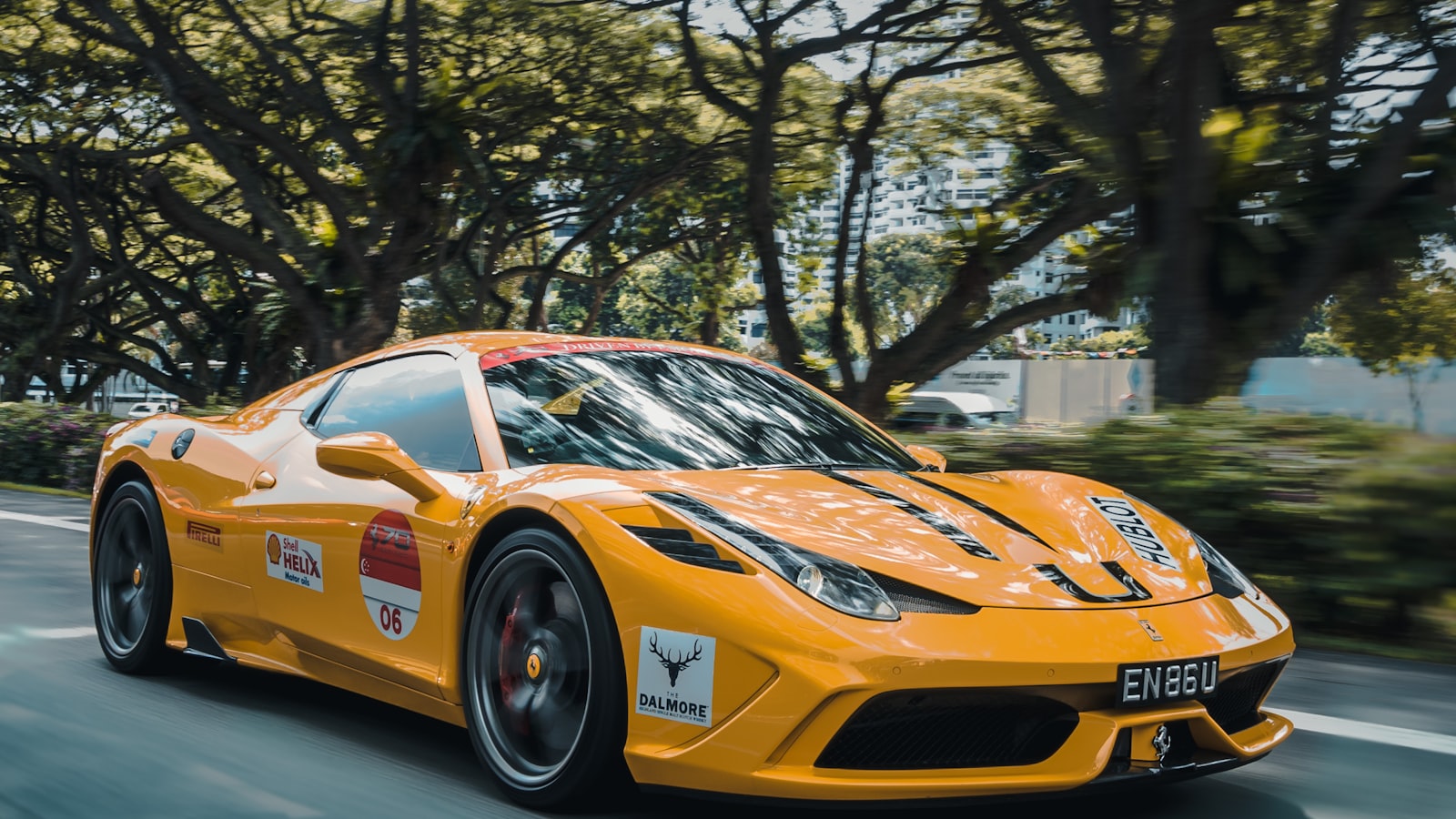
Between June 2022 and January 2024, I had a 2015 Ferrari 458 Italia stored at a self-described "climate-controlled premier exotic storage facility" in Scottsdale, Arizona. I drove the car maybe 600 miles in that period. When I retrieved it in January 2024, my mechanic — a Ferrari specialist in Scottsdale who has run Ferrari service for thirty years — gave me a list of items totaling $13,847.
None of these were what I expected. None of them involved the engine, the transmission, the carbon body components, or anything that I had worried about during storage. All of them were the kind of mundane neglect that, in retrospect, was entirely preventable. I want to write this down because the Ferrari ownership press is full of advice about how to drive a 458 and very little about how to not break one through inattention while it's sitting still.
The car, briefly
2015 Ferrari 458 Italia, Rosso Corsa over black/red, 14,200 miles when I bought it in 2021 from a dealer in San Diego. I drove it for a year, primarily as a weekend car. In June 2022 my work changed (briefly — a long story I'll spare you) and I needed it out of the garage for eighteen months. The Scottsdale facility came recommended by another collector I trusted. I drove it there over two days, parked it, and saw it twice between then and the eventual retrieval.
What killed it
I want to enumerate, in roughly the order of cost.
Fuel system contamination — $4,200. The 458's fuel system is sensitive to ethanol-related degradation. The car was stored with about a quarter-tank of premium that had ethanol in it. Eighteen months in Phoenix heat, even climate-controlled (the facility maintained 75°F, +/-5°), and the fuel separated. Water condensed into the bottom of the tank from temperature cycling. Bacterial growth started in the bottom of the fuel rail. The high-pressure pump's pickup screen plugged. The car ran rough on retrieval and stalled twice on the way to my mechanic. The fix was tank drain, system flush, pump replacement, new filter, fresh fuel. The mechanic told me afterward that I should have either run the tank to about an eighth, added a marine-grade fuel stabilizer, or sealed the tank and pulled it for storage. Any one of those would have been roughly $50 of effort.
Tire flat-spotting and sidewall damage — $3,600. The car was on its original Michelin Pilot Super Sport 4Ss when I stored it. Climate-controlled or not, sitting on the same patch of rubber for eighteen months at the recommended storage pressure (42 PSI, per the manual) flat-spots the tires. I rotated the car a quarter-turn twice over the eighteen months — not enough. Worse, the storage racks the facility used put the bottom of the sidewall in contact with a metal grate that left an impression. I needed all four tires. Could have been prevented with proper tire cradles, which the facility had available for an extra $40 per month. I had not paid the extra $40.
Battery and electrical — $2,700. The 458 has, depending on options, between 1,800 and 2,200 mA of parasitic draw at rest. The OE battery is around 50 amp-hours. A normally healthy battery will sustain that draw for about three weeks before requiring intervention. I had a trickle charger connected. The facility unplugged the trickle charger at some point during a power event in early 2023 (the facility had a brownout from a thunderstorm; their UPS handled the storage room lights but not the individual outlets). The battery sat unconnected for an unknown period — at minimum two months. By retrieval, the battery was dead and the body control module had developed a fault from running on near-zero voltage for too long. Replacement battery, BCM diagnostic, ECU reflash, and three separate driving sessions to clear stored fault codes. The driving sessions were on my mechanic. The parts and labor were $2,700.
Brake system corrosion — $1,800. Iron rotors do not like Phoenix humidity. Yes, "Phoenix humidity" sounds like an oxymoron. In a climate-controlled storage facility maintaining 35% RH, on iron rotors that were warm-soaked from the drive in, the moment the car came to rest the calipers began to develop surface corrosion on the rotor's friction surface. Eighteen months later this was significant scoring that the pads could not clean off in the first hundred miles of driving. Resurface both fronts, replace rears, fresh pads all around.
Air conditioning system service — $1,300. The 458 has a known issue with the AC compressor seal weeping refrigerant over long storage periods. Mine had lost roughly half its charge. Refresh, leak detection, and a discounted refrigerant top-up.
Detailing and paint correction — $1,247. The car had not moved in eighteen months. Even in a climate-controlled facility, micro-dust accumulates. The clear coat had developed minor swirl marks from the facility's annual "dust-off" service (which I had paid for; do not pay for this — they use the same microfiber on dozens of cars). Two-stage polish and full ceramic re-coat.
Total: $13,847, before sales tax. Plus the mileage on my mechanic, who I'll call Sergio (not his real name), who I owe a steak dinner.
What I'd do differently
For anyone considering long-term storage of a low-mileage exotic, particularly in a hot or humid climate, what I now do — and have done with two subsequent cars I've stored briefly — is this:
- Run the tank to an eighth before storage. Add marine-grade fuel stabilizer at the correct ratio. Drive five miles to circulate.
- Tire cradles or wheel jacks under all four corners. Do not leave the car sitting on its tires for more than about sixty days. The expense of cradles ($120 to $400) is laughably small compared to four new Michelin Cup 2s.
- Battery tender with a battery monitor I can check remotely. I now use a CTEK MXS 5.0 with a Bluetooth interface that pings me if voltage drops below threshold. Cost: $180. Would have saved me $2,700.
- Brake system: bleed before storage, ensure DOT 4 is fresh, and either coat the rotors in a thin film of high-temp grease (which you remove before first drive) or rotate the car periodically to expose different rotor sections to the pad contact patch. I prefer the rotation.
- Drive the car. Once a month. Even fifteen minutes. The single most consistent factor in long-storage damage is the absence of operating heat cycles. The fuel system, AC system, transmission seals, and brake system all benefit. If you cannot drive it, find someone who can.
The honest takeaway
The damage was not the storage facility's fault. They did exactly what I paid them to do. Half of the items above were my fault directly. The other half were preventable with $400 of equipment and twenty minutes a month of attention.
The carbon-era Ferraris (the 458, the F12, the 488 first-year cars before the GTBs) are mechanically robust in normal use. They are fragile in storage. They were not engineered to sit. They were engineered to be driven, and the difference between an owner who drives them and an owner who stores them shows up in the maintenance ledger.
I keep the 458 now. I drive it more than I did before the storage experiment. The total cost of those nineteen months of immobility, including the $13,847 of catch-up work, was probably $16,500 with depreciation. That's a lot of fuel. I think about it.