
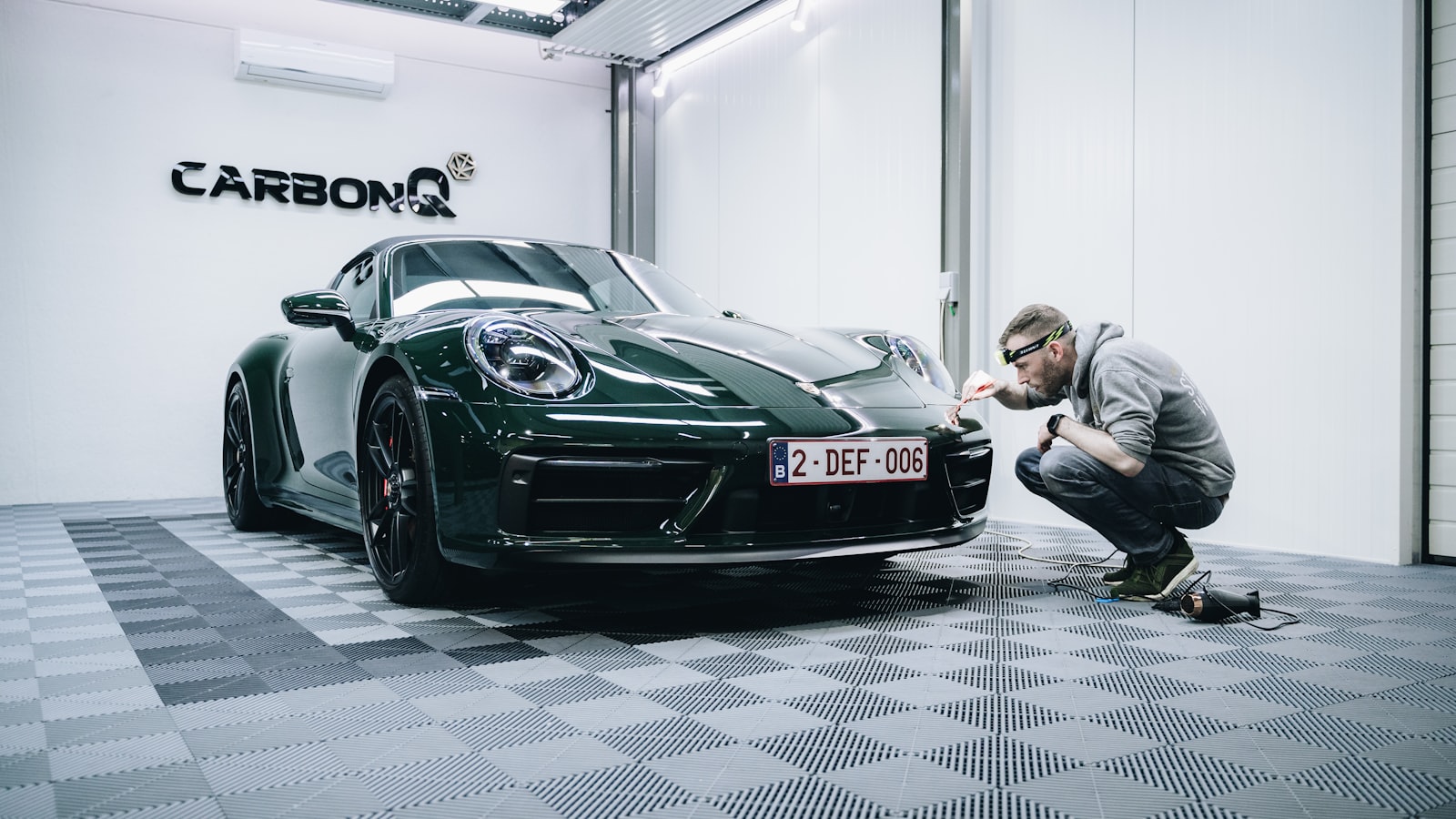
I have owned three cars over the last decade with exposed carbon-fiber body panels. The 2018 GT3 RS I had briefly. The 2017 720S I owned for two years (the Carbon Pack 1 trim, exposed carbon on the splitter, side skirts, rear diffuser, and engine cover). And, currently, the carbon-fiber roof and rear ducktail on a recent build (not yet ready to write about — separate piece).
Across those cars I have engaged five different professional detailers — two highly recommended, one I knew personally, two that I selected based on reviews and proximity. Two of the five damaged carbon panels. One mild, one expensive. I want to write down what I learned because the detailing-industry guidance on exposed carbon is, in my experience, inadequate, and the consequences of getting it wrong are not trivial.
What exposed carbon actually is
For anyone whose mental model is "carbon fiber is like paint but cooler-looking," that is not what you have. An exposed carbon body panel is a structural composite consisting of woven carbon-fiber cloth bonded with epoxy resin, finished with a clear gel-coat or 2K clear coat that protects the resin and gives the panel its visual depth.
The clear coat over carbon is, in most factory applications, thinner than a comparable paint clear coat. Factory thickness numbers vary by manufacturer, but for reference:
- Standard PPG paint clear coat on a production car: 45 to 65 microns
- Porsche factory clear over an exposed-carbon panel: 30 to 40 microns
- McLaren factory clear over Carbon Pack 1 panels: 25 to 35 microns
- Ferrari Tailor Made exposed-carbon panel clear: 30 to 45 microns
The clear coat is thinner. The substrate underneath is also fundamentally different — a UV-sensitive epoxy resin instead of a metal panel. The clear coat is the only thing keeping the resin from yellowing, the weave from delaminating at the edges, and the panel from looking like garbage within five years. When you compromise the clear coat, you compromise the panel.
What the detailers got wrong
Two failure modes, both common.
Failure mode one: standard paint correction protocols. A professional detailer is trained on paint correction. The standard sequence — compound, polish, finish — is designed for paint clear coat that is 50 microns or more deep. Compounding removes 2 to 6 microns per pass with an appropriately aggressive pad and product. On a paint clear coat at 60 microns, you have room for several correction sessions across the car's life. On an exposed-carbon panel at 30 microns, a single compounding pass can remove 15 to 20 percent of the panel's protective layer.
The first detailer who damaged my McLaren ran a Rupes 21 Mark II with a microfiber-cutting pad and a heavy compound (Sonax CutMax) on the rear diffuser to remove a small swirl mark cluster. The swirl marks came out. So did about half of the clear coat. Eighteen months later, the diffuser's resin began to yellow at the edges where the clear coat had been thinned. Replacement panel from McLaren was $7,400 painted. I did not order a replacement. I had it wrapped instead. The wrap was $850 and you can't see the yellowing under it.
The second detailer — same panel, different car (the GT3 RS rear wing) — used a non-foam pad with a polish that was, on a paint clear, perfectly appropriate. On the wing's exposed carbon, the pad heated the panel beyond the resin's working temperature. The clear coat developed a fine spider-web pattern of stress cracks visible only in oblique light. Could have been worse — the wing was structurally fine — but cosmetically the panel was permanently degraded. PPF over the top hid most of it. I sold the car six months later.
Failure mode two: chemical incompatibility. Carbon-fiber panels' clear coats are typically 2K polyurethane systems, similar to paint clear coat in chemistry but with different solvent sensitivities. Aggressive solvent-based cleaners (paint thinner, MEK, certain prep solvents detailers use to remove polish residues) can soften the clear and leave it cloudy. A detailer who treats the carbon panels with the same prep chemistry as the painted body panels can produce a temporary haze that, depending on contact time, may permanently impair gloss. I have seen this once, on a friend's car. The detailer was surprised. The owner was less surprised.
What I now do instead
Three things, in order of importance.
One: measure first. Before any work on a carbon panel, I want a paint depth gauge reading at multiple points on the panel. Standard digital gauges (Defelsko PosiTest, Highline-105) work on carbon panels because the substrate has detectable electrical properties through the resin. The reading gives you the total film thickness of clear coat and primer over the carbon substrate. If you do not have a reading, you do not know what you have to work with. Any detailer who proposes compounding on carbon without a depth-gauge reading is, in my view, not qualified to work on the panel.
Two: use foam pads with light products only. The aggressive cutting pads and compounds developed for paint correction have no place on exposed carbon. A soft to medium foam pad with a fine-grade polish (P&S Inspiration Polish, Carpro Reflect, similar light-grade products) is the correct starting point. If a polish at that grade will not remove the defect, the defect either gets PPF over it or accepts as part of the panel's character. The carbon panel is not a paint panel; it does not get paint-panel correction.
Three: PPF first, correction second. The reason factory exposed carbon survives ten years on some cars is because most owners wrap the high-impact areas with paint protection film. The PPF can be replaced; the carbon cannot. On any car with significant exposed carbon, my first move now is full PPF on the high-impact panels — rocker areas, front splitters, rear diffusers, anywhere a stone might land — before the panel ever sees a wash mitt. The PPF gets damaged. The PPF gets replaced. The carbon stays factory.
What to ask a detailer before letting them touch a carbon panel
One question gets you most of the way there: "What is your protocol for carbon-fiber body panels, and how does it differ from paint correction on a metal panel?"
A qualified detailer will answer with specifics. They will mention reduced compound aggressiveness. They will mention foam pads. They will mention either depth-gauge measurement or visual assessment with raking light. They will probably mention either PPF as a preventive step or explicit caution about correction limits.
An unqualified detailer will answer with reassurance — "don't worry, we do this all the time" — without the specifics. That is the wrong answer. Walk away.
Two of my five detailers gave the wrong answer. They were both excellent on paint. They had never been taught the difference. Neither could afford the panel replacement on the cars they damaged. I have not used either of them since.