
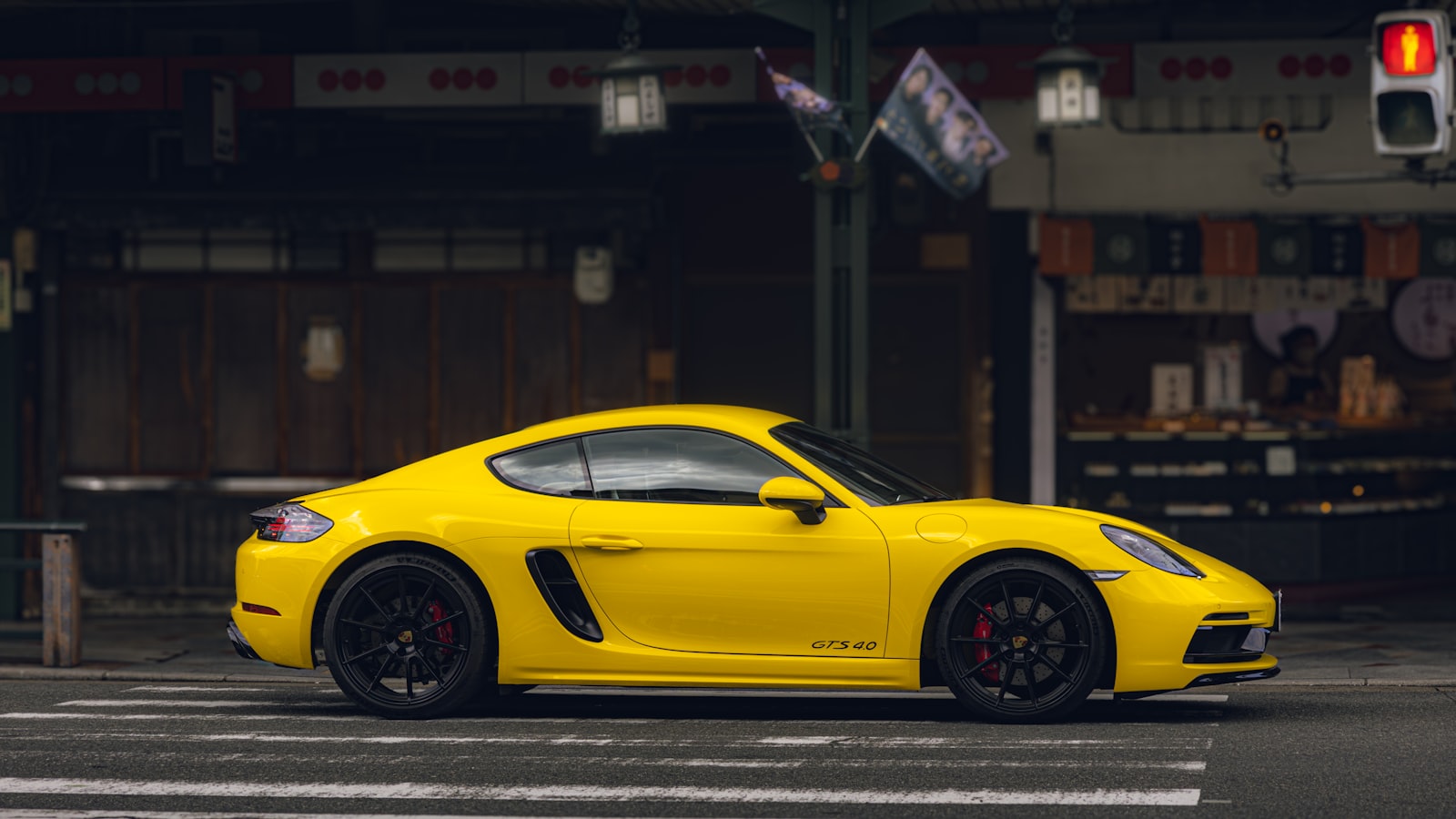
Let me get the disclosure out of the way: this is not a real CTR. It is a 1987 Carrera with a long list of CTR-spec parts, a CTR-cribbed engine build, and the Blossom Yellow it should have been wearing from the factory if Porsche had built such a thing in 1987, which they did not. The car wears no RUF badges. The VIN says "Porsche." And anyone who knows what an actual RUF CTR is — built between 1987 and 1989, 29 originally built, a sub-four-second 911 in an era when nothing was — would clock the difference in about six feet.
So I am not pretending. This is a build. The reason I'm writing about it is that it took five years longer than I told my wife it would, and I think that's worth being honest about.
The base car
I bought the 1987 Carrera in March 2019 from a man in Sacramento who had owned it for sixteen years. It had 142,000 miles, a perfect maintenance file, no rust, and a respray in Grand Prix White that I knew on day one would not be the color it stayed. He was sad to sell it and I think a little relieved I didn't want to keep it factory. We agreed on $46,000 over coffee at a Denny's off I-80. He let me drive it home.
The car was, mechanically, a textbook 3.2 Carrera. Bone stock except for a Bilstein sport setup the previous owner had installed in maybe 2008. The G50 was tight. The 915-to-G50 swap question never came up because this car was already a G50 — production starting that year. Important detail. The G50 is the gearbox I wanted for what I planned to do.
What "CTR tribute" meant
I was clear with myself from the start about what I would and wouldn't do. I wouldn't fake the chassis number. I wouldn't claim provenance I didn't have. I wouldn't sand-cast a CTR engine block. What I would do was build the closest reasonable approximation of a CTR's character using period-appropriate parts and modern execution. That meant:
- Engine. Twin-turbo 3.4L 930-based build, using a 3.3 Turbo bottom end I bought in pieces in 2020, with revised JE 8.0:1 pistons, ported heads, KKK K27 turbos (yes, I know modern Garrett would make more power for less money — I wanted the period response curve), and a custom intake plenum patterned off photos of the CTR motor I'd taken at Amelia in 2017. Final dyno number was 432 wheel-horsepower on 91 octane with the boost dialed back to 0.9 bar for street duty. Not a CTR's 469 crank, but in the ballpark and on pump gas.
- Bodywork. Original 3.2 Carrera fenders, hood, and roof. Flat decklid with the CTR's flared whaletail. The riveted rear arches and front splitter were fabricated by a local shop in Santa Cruz who had done a 935 tribute the year before and knew what they were doing. It took eleven months. They warned me it would take eight.
- Paint. Blossom Yellow, two-stage, base coat polished out to match a 1989 CTR I had a paint code reference for. The painter spent three weeks color-sanding. He charged me less than he should have, and I have referred him three jobs since.
- Brakes. 930 calipers front and rear with cross-drilled rotors. Not big-brake-kit territory. The CTR ran period brakes and they were already lighter than the 930 Turbo's because of the wheel weight savings.
- Wheels. Original RUF-style 17-inch three-piece wheels, sourced from a German specialist in 2021 for an embarrassing amount of money. Worth it.
What took five years
The plan was thirty months. The reality was sixty-two. I want to be specific about why because every project car build I've ever read makes the timeline look like an Excel chart and it never is.
The engine build cost me eighteen months alone because the 3.3 short block I bought in 2020 turned out to have a hairline crack on the number-five cylinder I didn't catch until first start-up. I tore it down, sourced a replacement block from a man in Texas via PCA classifieds, and started over. The second build went together properly. The first build cost me about $14,000 in labor and parts I couldn't reuse.
Paint took longer than promised because my body shop's main painter had a back injury in mid-2023 and was out for four months. I waited rather than starting over with someone new. It was the right call.
And — this is the bit I want to flag — about year three I had a stretch where I genuinely considered selling everything in pieces. The garage had become a place I avoided. My then-six-year-old wanted to know why daddy's car was always "sleeping." I sat down one weekend, made a list of what was actually left, and discovered I was much further along than the noise in my head suggested. Two months later I lit the engine. That moment is hard to overstate.
What it drives like
I have put 4,200 miles on the finished car since the first registration in March 2025. It is, in honest terms, terrifying for the first half-hour every time I get in it. The K27 boost build comes on around 4,200 rpm and arrives like a freight train. The chassis is talkative in a way that modern cars have engineered out for good safety reasons. The brakes are adequate, not heroic.
It is also the most engaging car I have ever owned. Not the fastest — my old 992 GT3 Touring would gap it on any real road. But this thing demands attention in a way that puts you in a different headspace. There is no chapter of this drive where I am thinking about email.
What I'd do differently
I would have built a larger garage first. I would have committed to one body shop from the start instead of getting quotes from three. I would have bought the wheels in year one when I had the cash and the market was softer. I would have told my wife the timeline was sixty months and just been right.
Mostly: I would have started sooner. I owned the donor car for two years before I lit the build. That's two years of saved-up labor cost evaporating against inflation and parts price increases. The build, all in including the donor purchase, came to roughly $186,000 over six years. Today I think it would cost closer to $260,000 to replicate. The lesson is that project cars get more expensive the longer you wait, and the value of the finished car does not always keep up.
Would I do it again? Knowing the cost? Knowing the time? Knowing that the man I bought the donor from passed away in 2022 and I sent his widow a photo of the finished car and she cried? Yes. Absolutely yes.
I'll write a longer piece on the engine build specifically in a few months. The decisions I made about the turbos alone are worth their own article, and I have a stack of dyno sheets I want to put somewhere they'll do anyone any good.