
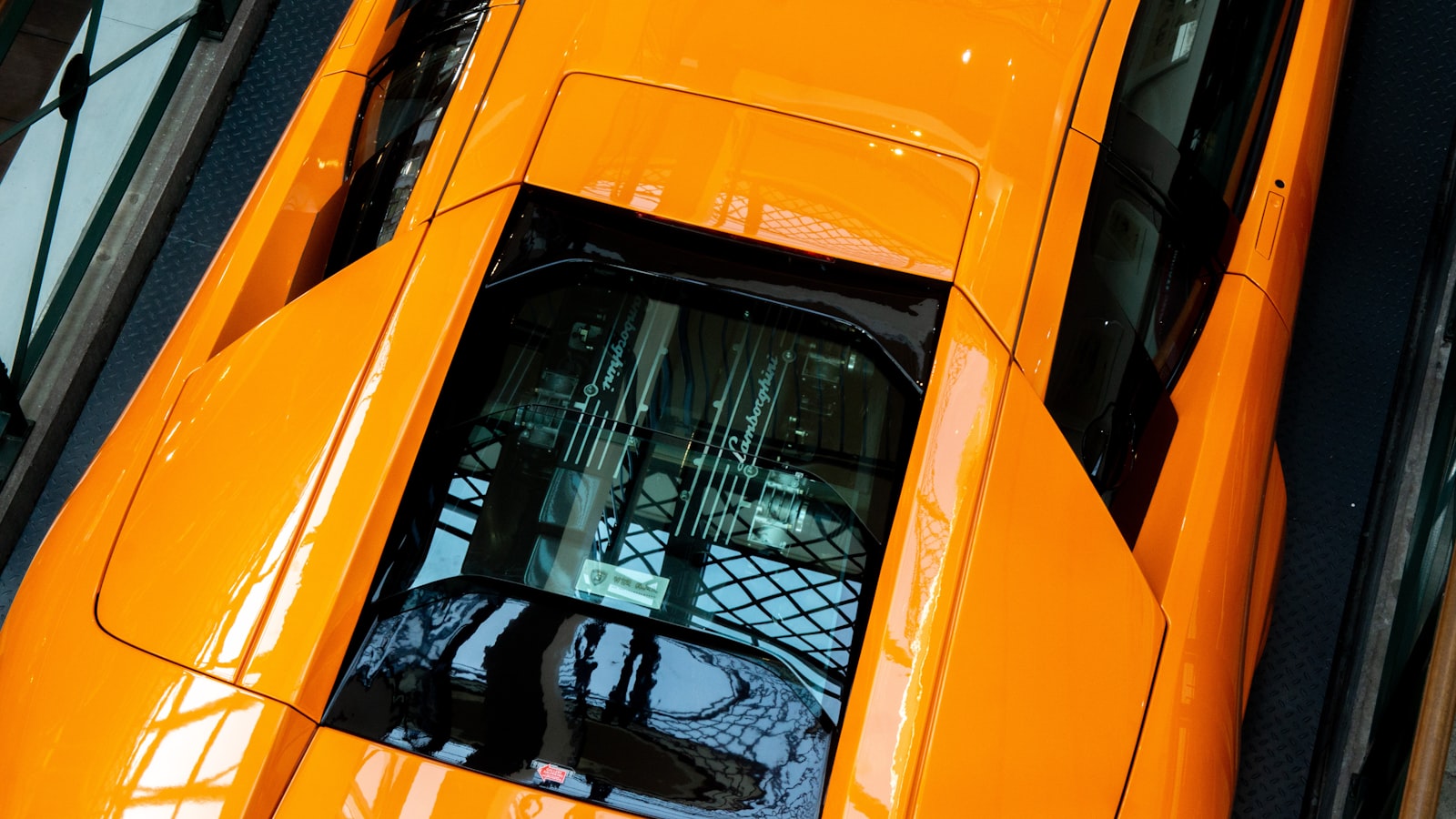
I had a client in September who asked me a simple question: is a manual Murciélago LP640 worth roughly twice what an E-gear LP640 of identical year and trim is worth?
I told him probably, but I needed to walk him through the math. This piece is a longer version of that walk-through.
The market context
Lamborghini built 4,099 Murciélagos in total between 2001 and 2010. Of those, the breakdown of manual to E-gear (the automated single-clutch sequential) is approximate but documented at roughly 30 percent manual, 70 percent E-gear across the full production run. The early cars (2001 to 2003) were manual-heavy because the E-gear was not yet refined. The late cars (LP640 onward, 2006+) were E-gear dominant because customers had been frightened by reports of clutch wear and shift quality issues that, with the benefit of hindsight, were overstated.
That demographic split, combined with the growing "analog supercar" collector preference of the 2020s, has produced the current pricing situation. An E-gear LP640 coupe in clean condition with 25,000 to 35,000 km currently trades around $260,000 to $310,000. The same car in manual is $440,000 to $520,000. The same dynamic applies to the LP670-4 SV, where the manual cars are well above $1M and the E-gears trade in the $720,000 to $850,000 range.
So the manual premium on a stock LP640 is roughly 60 percent. The question my client was asking is whether the maintenance and ownership math justifies it.
What it costs to keep a manual Murciélago happy
The bad news first: the Murciélago manual has specific maintenance items that are expensive in a way owners often don't anticipate.
The clutch. Twin-disc, 240mm, rated for roughly 30,000 to 45,000 km in normal use. Replacement is an engine-out job that takes 36 to 48 labor hours at a Lamborghini specialist. The clutch kit itself is $4,800 to $6,200 depending on supplier. Engine-out service from a specialist (Houston Crash, AutoSavant, Lamborghini Beverly Hills if you can get an appointment) runs $14,000 to $18,000 all-in. Plan on it every 40,000 km. If the car has been driven aggressively, every 25,000 km.
The synchros. Second and fourth gear synchros wear faster than the others on the OE design. Symptoms: occasional crunch on the 1-2 upshift when cold, crunch on the 3-4 upshift under load. A worn synchro is not a problem until it is, but the eventual repair is a transmission-out service. Roughly $9,000 to $12,000 in labor before any parts. The transmission can be rebuilt for $4,800 to $7,200 in parts depending on what's needed.
The shift linkage. The gated shifter is one of the most aesthetically perfect components on any production car. It is also a mechanical assembly with bushings that wear, linkage rods that develop play, and a remote shifter housing that requires occasional adjustment. Refurbishment of the entire shift linkage assembly is about $1,800 in parts and 6 to 8 hours of labor. Plan on it once during the car's life.
Routine maintenance. Same as the E-gear cars: $2,400 for an annual service, $4,800 for the 30,000-km major service, valve adjustment every 60,000 km at $5,200 to $6,800. None of this is specific to the manual.
What the E-gear costs by comparison
The E-gear system has its own maintenance reality, and it is — this is the part that gets buried in the manual-versus-E-gear arguments — significantly more expensive per mile than the manual in long-term ownership.
The E-gear clutch. Single-disc, smaller diameter than the manual's twin-disc, more aggressively used by the system's launch and shift logic. Service life: 18,000 to 25,000 km in normal use, as low as 12,000 km in cars used aggressively. Cost: roughly the same as the manual clutch service because the engine-out access is identical. So a manual gets 40,000 km on a $16,000 service; an E-gear gets 22,000 km on the same $16,000 service.
The E-gear actuator. The hydraulic actuator that operates the clutch and shift mechanism is a known wear item. Pump failures, accumulator failures, position sensor failures. Replacement is $8,400 to $11,200 in parts and a day of labor. Cars over 50,000 km will likely need at least one service to the actuator system. Cars over 100,000 km will probably need two.
Shift quality degradation. The E-gear's TCU adapts to clutch wear, but only within certain bounds. As the clutch wears, shift quality deteriorates in ways that are hard to bring back without a fresh clutch. A 70,000-km E-gear with 50,000 km on its clutch will feel notably worse than a fresh car. This is not a maintenance cost so much as a quality-of-life cost — the manual's clutch wear doesn't affect shift quality the same way.
The math at 40,000 km of ownership
For a client who plans to drive 40,000 km over a six- to seven-year ownership window, here is the actual cost differential:
- Manual LP640 over 40,000 km: one clutch service ($16,000), possible synchro work ($14,000 if needed, $0 if not — call it $7,000 expected value), routine maintenance ($14,400 over six years), shift linkage refurb ($3,600). Total: $41,000.
- E-gear LP640 over 40,000 km: two clutch services ($32,000), one actuator service ($10,000 expected value), routine maintenance ($14,400), no shift linkage. Total: $56,400.
The manual costs $15,400 less to operate over the same six- to seven-year window. Adjust those numbers in the opposite direction if the car is driven aggressively (the manual stays cheaper; the E-gear gets worse).
So is the 60 percent premium justified?
On a $300,000 E-gear LP640, the manual premium is roughly $150,000. The maintenance savings over a typical ownership window are about $15,000. That accounts for one-tenth of the premium. The rest of the premium is the driving experience and the collectability of the manual cars.
I think both are real. The Murciélago manual is the analog supercar that Lamborghini is no longer interested in making, and the market knows it. The collectability premium will, in my view, expand from here, not contract. A clean manual LP640 is, I think, a $600,000 car by 2030. That's a 25 to 35 percent expected appreciation over the same window. The E-gear cars will appreciate too, but less.
So yes, I told my client to pay the premium for the manual. The caveat: that argument depends on buying a low-mileage car with documented service history and either fresh consumables or budget set aside for them. A high-mileage manual with deferred maintenance is not a value buy. It's a $200,000 mechanic bill that comes with a car attached. I have seen three of those in the past eighteen months. Two of them are still in the buyer's garage waiting for parts.