
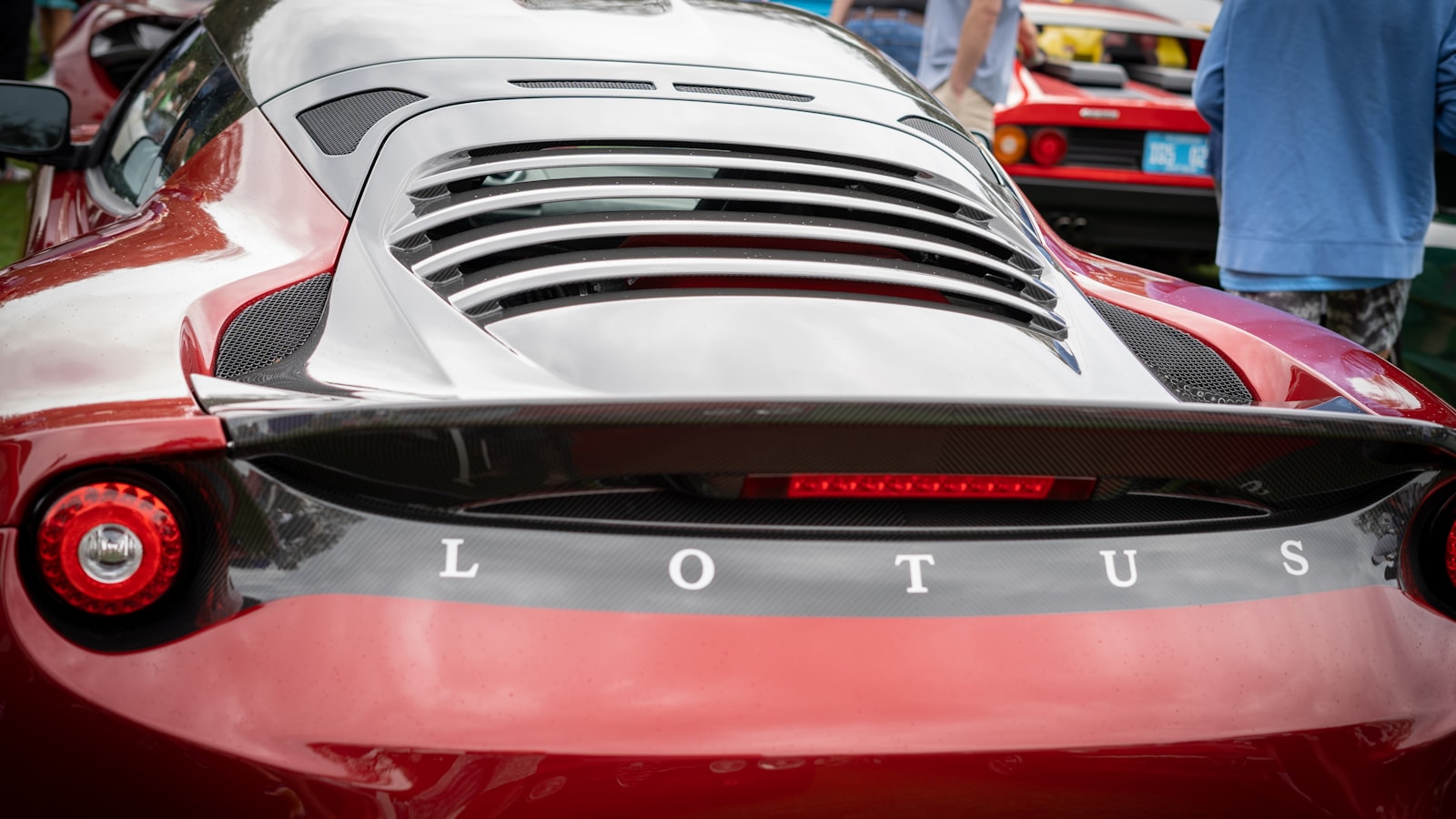
Eighteen months ago I told a client to walk away from a 2018 Evora 410 Sport priced at $79,500. The car was clean — 14,000 miles, one owner, a small file of receipts I trusted — but the price was wrong, and the dealer wouldn't move. He sold it ninety days later for $74,800.
I bring that up because I think the same car today is closer to $72,000 retail in a soft market, and the seller will move. The trend is real. What I want to talk about is whether the 410 Sport specifically, in this window, is worth the friction of dealing with a Lotus.
What the 410 Sport actually is
For anyone less neck-deep in this corner of the used market: the 410 Sport is the lightweight, no-cruise-control, no-sound-deadening trim of the Evora 410 — itself the supercharged 3.5L Toyota V6 (2GR-FE supercharged) Evora that bridges the original Evora and the eventual GT. North American 410 Sports were sold from roughly 2017 to 2019, depending on import. Production was small. Survivors are smaller. The one important thing to internalize: the "Sport" designation matters. The non-Sport 410 (where it was sold under different names by market) has soft mounts, more sound deadening, the optional automatic, and the option set most buyers chose. The Sport is the manual-only, cabin-light, Sparco-buckets car. It's a different driving experience and a different used-market animal.
The numbers, mid-2026
Pulling the last twelve months of comps I have direct visibility into (private sales I brokered, plus three auction sales I tracked closely):
- 2018 410 Sport, 8,400 miles, one owner, full books — sold $79,200, July 2025, private sale
- 2017 410 Sport, 22,000 miles, second owner, partial books, light track use — sold $66,500, October 2025, dealer wholesale
- 2018 410 Sport, 12,500 miles, no books, repaint on left rear (small parking incident) — sold $63,000, January 2026, RM Sotheby's online
- 2019 410 Sport, 5,800 miles, original owner, garaged — listed at $84,500, has been listed for 11 months and counting
The pattern is consistent. Books and ownership history are worth roughly $8,000 to $10,000 on this car. The $84,500 listing has been sitting because the seller is benchmarking against the optimistic 2022 prints. The market doesn't care.
What goes wrong
The 2GR-FE in supercharged Lotus trim is fundamentally a Toyota engine wrapped in Lotus-specific cooling, air intake, and packaging. The good news: the bottom end is essentially indestructible. The bad news: every Lotus-specific bracket, hose, and adapter around it costs three times what you'd expect and takes twice as long to source. I have seen:
- Coolant hose failures on the supercharger circuit. The factory hoses harden at the supercharger end after about 50,000 miles. Replacing them is straightforward if you have the right hands, but the OE part lead time has hovered between six and twelve weeks for three years.
- AC compressor failure. Common on Evoras generally; the compressor sits in a location that doesn't love thermal cycling. Plan on it at some point. Aftermarket replacements work fine.
- Rear bonded chassis section corrosion in cars that lived in coastal climates. The Sport's lighter weight comes partly from less corrosion protection on the bonded aluminum sections. I now PPI every Evora with a flashlight and an inspection mirror at the rear chassis-to-engine subframe joint.
- Clutch master cylinders. Lotus used a master with a known weakness in this generation. Replace it with the updated part and stop worrying.
What I do not see on the 410 specifically: catastrophic engine failures, supercharger failures, or transmission issues. The Toyota-derived powertrain is the strongest argument for the car at the price.
The competition you're shopping against
At $70,000, you're cross-shopping a Cayman GT4 (981 generation, 2016) at roughly the same money in tidy condition, an Alfa 4C in clean trim, and an Audi R8 V8 from 2013 or so that needs a service. The 410 Sport is the most engaging of the four to drive on a real road, and the least practical to live with. That's a feature for some buyers and a non-starter for others. The GT4 has better parts availability and a 911 dealer network behind it. The 410 Sport will arrive at any conversation more talked-about and less understood.
What I'd pay, today
If I had a client looking for a 410 Sport this week, I'd be in the market at $68,000 to $72,000 for a sub-15,000 mile car with full ownership history and a clean PPI. For a 20,000-plus mile car with one owner and a service binder I trust, $63,000 to $66,000. For anything without books, anything with a repaint, anything from a coastal climate without underbody photos: walk. The market has enough supply right now that you do not need to compromise.
For the $79,000 example I told the client to pass on eighteen months ago: still no. The condition was right but the price was disciplined optimism, and disciplined optimism only works in a rising market. We're not in one.
The market call
I think the 410 Sport sits in a window for the next six to nine months where the entry price is unusually friendly relative to the driving experience. I do not think the market is about to reprice the car upward in any meaningful way — the supply isn't tight enough, and Lotus's recent pivot to Geely-era electrification has dampened collector enthusiasm for the old-money supercharged cars. But I also don't see further downside from here. Sub-$70,000 on a tidy 410 Sport is, I think, where it ought to sit, and where it is.
If you've been on the fence, this is a buying year, not a regret year. Just bring books, bring patience for parts lead times, and bring a flashlight for the PPI.