
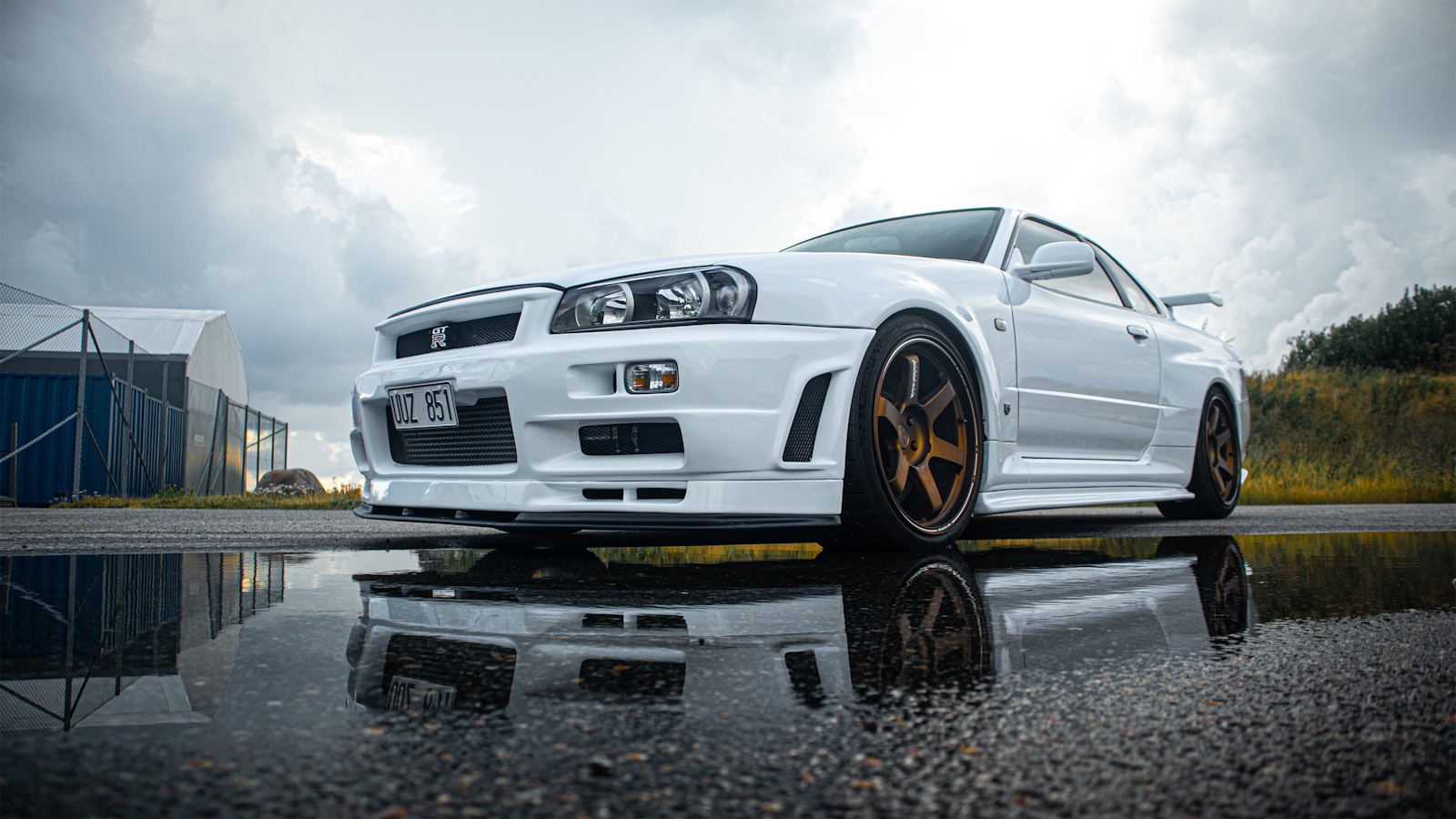
I want to talk about the R35 GT-R in 2026, specifically the 80,000-mile-and-up examples, because I think they are systematically misunderstood by buyers and underpriced by sellers. Let me lay out what I actually see in the field and what I tell clients to do.
The market in mid-Q1 2026
The Nissan R35 GT-R was produced in road-going form from 2007 (2009 model year in the US) through 2024 internationally and 2021 in the US market. In the US specifically, that means model years 2009 through 2021 are available — roughly 24,000 cars sold here, give or take. The Nismo trim is a separate market and not what I'm covering here.
Today, a 2009 Premium with 50,000 miles in clean condition trades around $58,000. A 2014 Black Edition with 90,000 miles, complete service records, and a clean PPI is around $66,000. A 2017 Premium with 70,000 miles, single owner, dealer-serviced, is in the $80,000 to $85,000 range. The post-2017 GR6 transmission upgrade and the post-2017 hardware refresh make those cars genuinely better, and the market reflects it.
What has changed in the last eighteen months is the high-mileage segment. A 2012 Premium with 110,000 miles, complete service records, and a clean PPI was $48,000 in early 2024. The same car today is $39,000. The change isn't about reliability — I'll get to that — it's about supply. Five years of these cars aging into their second and third owners, plus the broader cooling of the JDM enthusiast market post-2023, has pushed the high-mile cars down meaningfully. I think it's a buying window. Most clients I've spoken to recently disagree.
What goes wrong on a high-mile R35
The R35 has a deserved reputation for being expensive when it breaks. The reality is more nuanced. There are roughly four failure modes that matter:
One: the GR6 transmission. The dual-clutch transaxle is the most expensive thing on the car, and the pre-2017 hardware has a documented weakness in the gear set under hard launches. Cars that were used in drag-strip applications or had aftermarket launch control will have shortened transmission life. A factory-launched 2014 with a careful owner will go 150,000 miles on the original transmission. A 2014 that was beat on will eat its second transmission by 80,000 miles. The PPI tells you which one you have: the gear-tooth telemetry in CONSULT (Nissan's factory diagnostic) records peak torque and launch counts. Get the dealer to pull it. If they refuse, walk.
Two: the dual-clutch fluid. Separate from the transmission itself. Factory service interval is 36,000 miles. Most owners ignore it. The fluid is $480 per change at a dealer, more at independents. Cars that have skipped the service show up with stutter on cold-start engagement and slightly-degraded shift quality. Cars with documented every-30,000-mile fluid changes are night-and-day different on a test drive. If the records don't show recent transmission service, plan on doing it within thirty days of purchase and budget accordingly.
Three: the bellhousing-to-engine bolts. Specifically the lower bolts. The bellhousing on the GR6 is bolted to the engine through holes that experience repeated thermal cycling. On cars with high launch counts (typically modified cars, but I have seen it on stock cars too), the bolts loosen and eventually break. The symptom is a fluid leak from the bellhousing area. The repair is significant — transmission out, replace bolts, reinstall. Budget $3,200 to $4,500 depending on shop. This is the single most common surprise on cars I PPI.
Four: the high-pressure fuel pump. Reliable through about 100,000 miles, then it's a coin flip. The replacement part is $1,400 from Nissan, $890 from an independent supplier, $4,200 to install at a dealer including diagnostic. Plan on it at some point on a six-figure-mileage car.
What I do not typically see on high-mile R35s: engine failures, turbocharger failures, AWD system issues, brake system failures beyond consumables. The bottom end is genuinely durable. The turbos are stout in stock boost. The AWD differential and transfer case are over-engineered for the power level. The brakes wear pads and rotors like any heavy AWD car, and that's it.
What to look for at PPI
Three documents and three measurements. The documents:
- Complete service history. Dealer or independent specialist. I am specifically looking for transmission fluid changes (DTC clearings indicate ECU reflashes — often not a problem, but worth asking about).
- The CONSULT pull. Launch counts, peak boost, peak RPM. A factory-launched car shows roughly 0 to 200 launches over its lifetime. A drag-strip car shows 4,000+. The numbers don't lie.
- Title and accident history. Carfax misses about 30% of light hits on R35s in my experience. Get a hands-on body inspection.
The measurements:
- Compression on all six cylinders. Should be within 5% of each other. A failing cylinder is the early warning of bigger trouble.
- Boost leak test. The intake plumbing has too many fittings; clamps loosen. A worthwhile $200 spend before buying.
- Visual inspection of the bellhousing area for fluid leakage. This is the bolt-loosening symptom and it's the single most useful 30-second check on the car.
The 80,000-mile sweet spot argument
An R35 at 80,000 miles, with complete service records and a clean PPI, is at the point in its life where most of the early-failure items have either failed and been repaired, or are not going to fail. The transmission has either eaten itself or settled into a long, useful life. The bellhousing bolts have either let go or proven they'll hold. The fuel pump is the only major item still ahead, and it's a known, budgetable cost.
The market is pricing these cars on mileage anxiety. The mileage anxiety is, in my experience, misplaced. A well-maintained 80,000-mile R35 is more reliable, in the next two years of ownership, than a 30,000-mile car with unknown maintenance history. The 30,000-mile car has all the failure modes still ahead. The 80,000-mile car has half of them behind.
What I'd pay, today
For a 2014 to 2016 Premium with 75,000 to 95,000 miles, complete service history, no track use, no salvage, single recent owner: $52,000 to $58,000. For a 2017 to 2018 Premium with similar mileage and provenance: $62,000 to $68,000. For a 2019 to 2021 Premium with 30,000 to 50,000 miles, single owner: $94,000 to $104,000.
Above those numbers and you're paying for a market sentiment that isn't matched by the asset's durability profile. Below those numbers and there's almost certainly something you need to find on PPI. The R35 GT-R, in 2026, is a buy. The market doesn't know it yet.