
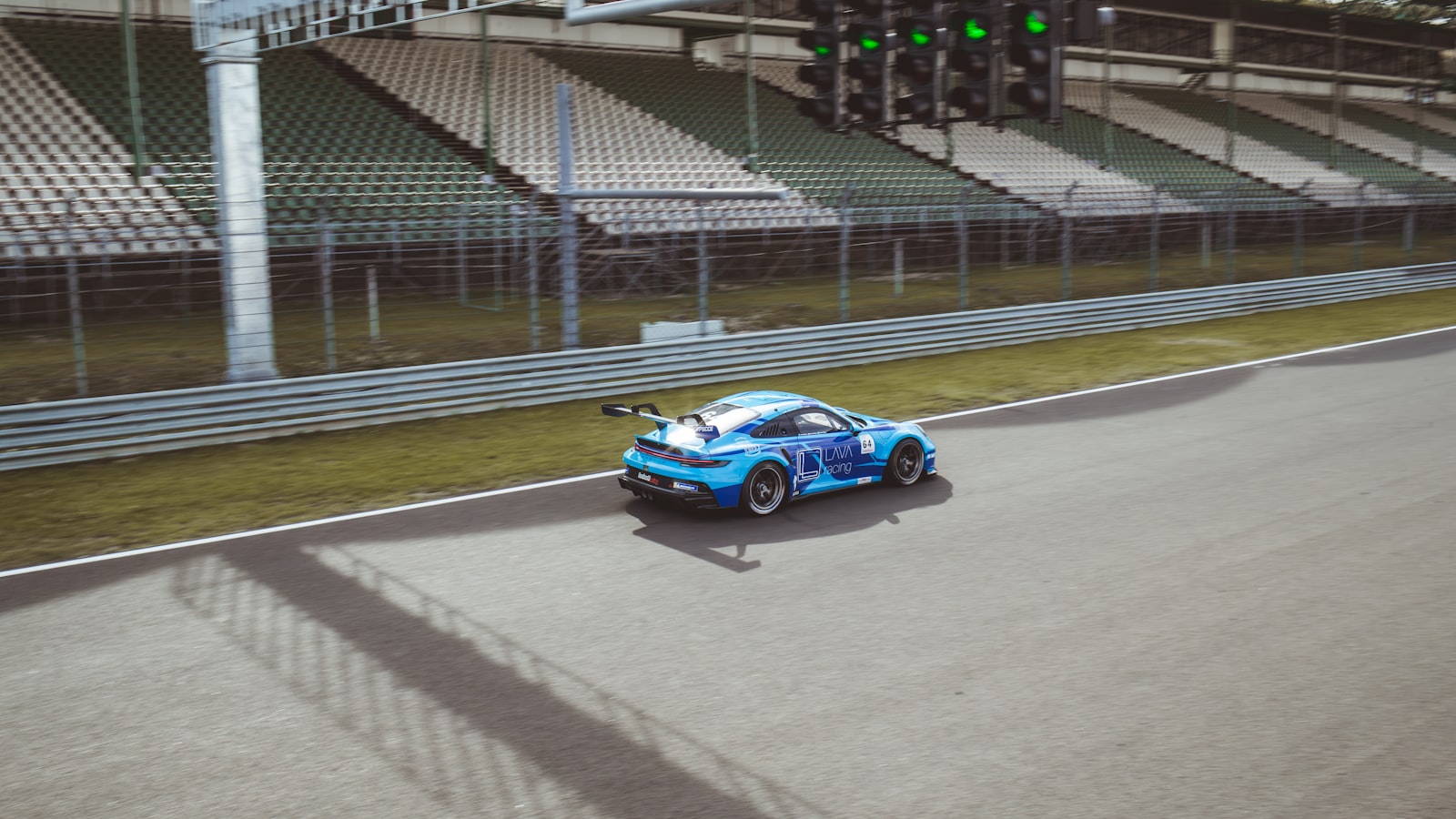
My first track day at Circuit of the Americas was in October 2019. I drove down from Northern California in a 2018 Cayman GTS with a packed trunk and a roof rack carrying tires, with what I thought was a complete track-day toolkit. By Saturday lunch I had borrowed three tools from my paddock neighbor. By Saturday evening I had a list of things I would never travel without again.
Twenty-two days at COTA later, my toolbox has been pared down (I have eliminated three categories of tool I now consider dead weight) and added to (mostly with consumables I underestimated). I want to write down what I actually carry, and roughly why, because the track-day toolbox advice on the internet is dominated by people writing aspirationally rather than from the practical experience of carrying weight on a long drive.
The case
I use a Pelican 1620 hard case. It costs around $400, weighs nine pounds empty, and survives airline gate checks if you are flying to a track. The wheeled chassis matters because at COTA your toolbox lives roughly forty feet from your car in the paddock — close enough to walk to during a session break, far enough that you do not want to carry it across hot asphalt twice a day. Two friends use Milwaukee Packout stacked systems; both have moved their primary track-day gear into Pelicans within the past two seasons. The Packouts are better for shop use. The Pelican is better for travel.
Tools that earned their place
Torque wrench, 1/2-inch drive, 20 to 150 ft-lb range. I run a Snap-On TechAngle digital. Roughly $400. I have torqued wheel nuts at the end of every session for six years. The cars that come off track with loose wheels are, in my experience, cars whose owners trusted their corner shop to set torque correctly the night before. The torque-after-every-session habit is the single highest-value preventive maintenance practice I have.
Tire pressure gauge. A Longacre 3.5-inch analog with a 0 to 60 PSI range. About $90. The digital tire gauges are convenient but die at the worst moments and I trust the analog reading more on a track day where I am bleeding pressure between sessions. I check pressures before grid, immediately on coming in hot, and one more time after a 15-minute cool-down. Three readings per session, every session. The number of times I have caught a slow leak with the cool-down check before it became a problem is — I have not counted, but it is more than five.
A 4-foot wrench breaker bar for lug nuts. No torque wrench can break loose a properly torqued wheel nut that has been heat-cycled. A long bar with a good 21mm or 19mm socket (whichever your car uses) is essential. Mine is a Snap-On L-handle, used annually for some session-induced reason — usually a tire change after a track-pad-on-stock-pad bedding mishap, occasionally a roadside issue on the drive home.
A small impact gun, battery-powered. Milwaukee M18 Fuel mid-torque, the smaller of the two M18 impacts. Around $260 with battery. I use it for tire changes during the day if I need to swap to rain tires or back. It saves time. It saves my back. I almost did not buy it. It earned itself the third weekend I owned it.
A jack stand pair plus a low-profile 3-ton aluminum jack. Aluminum because weight. Three-ton because the car is light, the jack is lighter, and a two-ton jack lifts a 911 just fine but lifts it more slowly when warm. The Daytona 3-ton low-profile is about $280 and has been with me since 2020. Jack stands are an additional $80 for a pair. Together they live in the trunk for tire changes and brake bleeds.
Brake bleed kit. Speed bleeder fittings if your car will accept them; a Motul hand-pump kit if not. A 1L bottle of fresh DOT 4 fluid (RBF600 or equivalent) in case of an unexpected pad change or a session where the pedal went long. I have bled at the track three times in six years. All three were post-session brake fade situations after upgrading or downgrading pad compound. Each time, the alternative was driving home with a long pedal.
Hand tools, basic. A reasonable metric socket set, combination wrenches 8 to 19mm, hex keys, Torx, a quality multi-tool. I keep these in a separate roll inside the Pelican so I can pull just the roll for small jobs without unpacking the whole case. The cost-effective answer here is a Tekton or Crescent kit from Home Depot. The expensive answer is Snap-On. Either works. The cars do not know the difference.
Consumables that earned their place
Brake fluid (1L, DOT 4 race spec). Already mentioned. Lasts two seasons unopened.
Brake parts cleaner. Quart-can in the truck on the drive down; smaller spray can in the toolbox. Useful for cleaning pad-bedding residue off rotors mid-event, useful for cleaning bleeder nipples before they go on, useful generally. Buy the chlorinated version where legal; it cuts grease faster.
Compressed air or CO2 inflator. A small CO2 inflator (Milwaukee M12 has one; Lezyne makes a hand-pump CO2 for cyclists that also works) lets you add 2 to 3 PSI between sessions without going to the paddock air compressor. The compressor line at COTA on a busy Saturday is 20 minutes long. The CO2 inflator gets you in the air in 90 seconds.
Zip ties, multiple sizes. Track-day mishaps almost always involve something needing a temporary attachment to something else. I carry 4-inch, 8-inch, and 12-inch black ties. I use them roughly every event.
Tire chalk and a Sharpie. For marking pressure changes, marking hot temps, occasionally marking the orientation of a wheel I am about to remove. The Sharpie is more useful than the chalk; I keep both anyway.
Two beach towels and a roll of paper shop towels. Trust me.
What I have stopped carrying
Three categories.
Diagnostic scanners. I used to carry a Durametric scanner. I have used it twice in six years. The car either runs or it does not; the codes you can read in the paddock do not tell you anything you cannot tell from how the car drives. I left the scanner at home in 2022.
Extensive spares. I used to travel with a spare alternator, a spare ignition coil, even a spare wheel-bearing assembly. None of these have ever been useful at the track. The closest I came was a wheel-bearing failure at Buttonwillow in 2021, which I diagnosed correctly but could not repair in the paddock anyway. I drove home with a noise and replaced the bearing the following week. The lesson: roadside repairs at racetracks are usually unfeasible due to time, lift, and parts logistics. Save the spares for the home shop.
Aerosol penetrating oils. Two cans of PB Blaster lived in my case for years. They never came out. Brake parts cleaner is more useful, and the PB Blaster is the kind of thing you actually need in the shop, not at the track.
What I wish I carried
A solid 10-by-10 EZ-Up canopy for paddock shade. I keep meaning to buy one. I keep borrowing my paddock neighbor's. The neighbor is the same one who lent me three tools in 2019. The debt grows.
The case-weight reality
My Pelican packed for COTA weighs 48 pounds. The car carries it in the front trunk. The drive down from Austin's airport is short enough that the weight is not a factor. If you are driving long distances to your home track, the toolbox is a real load. Pare it down with the same discipline you would apply to luggage. Take only what you have used in the past twelve months. Leave the rest at home.